Starlink and cattle ranching
Starlink and cattle ranching: Internet for Kenyan herders in remote plains
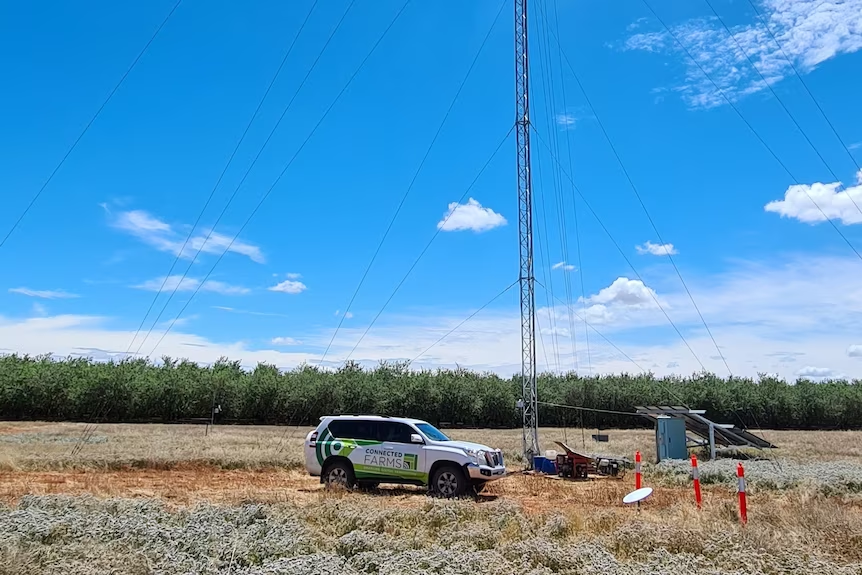
Across the expansive plains of Laikipia, Samburu, Kajiado, and parts of Turkana, herders and ranchers have long worked in some of Kenya’s most remote locations—often completely disconnected from the rest of the country’s digital ecosystem. For decades, accessing even basic mobile signal in these areas has been a struggle. But now, with the arrival of Starlink, many are starting to witness a shift in how livestock management, security coordination, and market access can be handled. According to real-world updates on connectivity improvements, Starlink’s satellite internet offers broadband-level speeds with coverage that reaches even the most isolated ranches.
Whether you’re moving cattle across vast plains or operating a permanent homestead in the arid rangelands, a reliable internet connection can make a big difference. From tracking herds using GPS collars to conducting virtual veterinary consultations, modern cattle ranching is becoming increasingly data-driven. Early adopters have reported improved access to online livestock markets and even remote training for ranch hands thanks to streamlined rural deployments of internet systems. In areas where power is limited, Starlink also works well with solar setups, and according to other independent service reviewers, the equipment runs reliably as long as there’s a clear view of the sky.
One of the key challenges for herders in northern Kenya has always been communication during long transhumance migrations. When moving with cattle in search of pasture or water, staying in touch with home bases, monitoring weather changes, or receiving updates on conflict zones has historically been near impossible. Starlink changes this. By enabling a portable internet connection, pastoralists can now receive timely updates about grazing conditions or even access Google Earth maps and rainfall forecasts in real-time. This connectivity isn’t just a convenience—it’s increasingly becoming a tool for survival.
Another major advantage is security coordination. In many cattle-keeping regions, theft and inter-community conflict are real threats. Starlink’s broadband allows ranchers to link with security camera systems, use WhatsApp or Telegram for fast alerts, and collaborate with local authorities or conservancy rangers. For instance, ranch owners near border zones like West Pokot or parts of Baringo can now get real-time alerts about suspicious movement or potential threats. With solar power, even remote bomas and manyattas can become fully connected.
Veterinary services also benefit significantly. Before Starlink, herders had to travel long distances or wait for infrequent visits by livestock officers. Now, with video calling made possible even in isolated regions, herders can show symptoms to veterinary experts instantly. This remote diagnosis capability has reduced cattle deaths and improved overall herd health, especially for diseases that require timely intervention such as East Coast fever, foot-and-mouth, or pneumonia outbreaks during cold seasons.
Moreover, young herders who are tech-savvy are now using internet access to take online courses in livestock management, pasture development, and sustainable ranching. The generational shift in pastoralism is being supported by real access to digital tools, something that Starlink is finally making realistic. Even simple actions like uploading photos to document grazing conditions, sending transaction proofs for livestock sales, or maintaining communication with buyers are becoming part of daily operations.
The mobility of Starlink’s setup is another attractive feature for pastoralist communities. With an inverter and basic solar kit, the Starlink terminal can be carried to mobile camps. That means access isn’t limited to permanent ranch houses; it can travel with the herd. For ranchers who split their time between seasonal grazing camps, this opens a new way of staying connected without being tied to one location.
However, the cost of entry is still a consideration. Starlink hardware and monthly service fees remain higher than those of traditional fiber or mobile bundles. But when you consider that fiber is simply unavailable in most ranching areas, and mobile signal is unreliable or nonexistent, many herders view the price as worth it. In fact, some ranching cooperatives and wildlife conservancies are beginning to pool resources to fund shared internet hubs that benefit multiple families or entire communities.
On the maintenance side, Starlink is proving fairly robust in dusty, dry environments. As long as the dish has a clear view of the sky, it performs reliably. Herders are advised to mount the dish on elevated poles, away from livestock movement, and protect the cable connections from damage. Local technicians have also begun offering installation help in towns like Maralal, Rumuruti, and Kimana, meaning setup is no longer a barrier for most people.
In conclusion, Starlink is transforming the cattle ranching experience in Kenya’s remote plains. It’s not just a luxury for urban users—it’s becoming a vital tool for digital inclusion, food security, and smarter pastoralism. Whether it’s improving access to veterinary care, enhancing security, supporting education, or linking herders to markets, the impact is both immediate and long-term. As more herders adopt this technology, Starlink may well become the backbone of a more connected, productive, and resilient pastoral future.
Don\’t struggle with your essays alone. Trust our essay writing experts at Saseni.com
At Saseni.com, we have a team of expert essay writers ready to assist you with your writing needs. Our essay writing experts are highly qualified, experienced, and passionate about delivering top-quality essays. Whether you need help with a research paper, an argumentative essay, a persuasive essay, or any other type of academic writing, our experts are here to provide you with the assistance you need.
 Hire Essay Writer