
Table of Contents
ToggleStarlink internet speed tests: How fast is it in Kenyan villages?
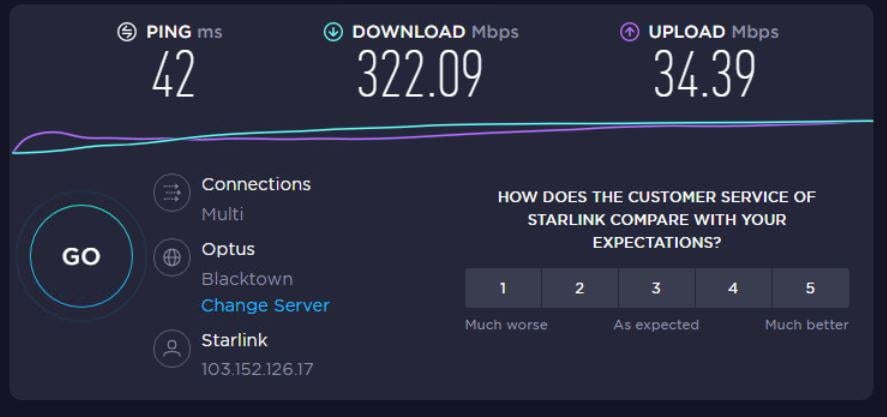
Starlink’s entry into the Kenyan market promised high-speed internet even in the most remote areas. But how does this satellite-based system truly perform on the ground? From the rural highlands of Kericho to the flat, open lands of Turkana, Starlink speed tests are now becoming the best indicators of its real-world effectiveness. Early adopters in the villages have started sharing their experiences and performance results, and some tests reveal consistent download speeds above 100 Mbps even in regions with no fiber or 4G coverage. Others are documenting surprising latency improvements for activities like video calls and online learning. If you’re curious about how Starlink stacks up to Kenya’s traditional internet providers in deep rural settings, you can also check recent performance comparisons here.
One major observation from local users is that Starlink speeds tend to be highest during off-peak hours. In remote villages like Kapsabet, Bondo, and Loitoktok, users report speeds ranging between 80–150 Mbps in the early morning and late night. These results allow for smooth HD and even 4K streaming, lag-free video conferencing, and stable online gaming. Even more importantly, users running businesses or schools from home are finally able to upload and download large files without relying on USB data transfers or SD cards as they once did. This speed consistency has positioned Starlink as a vital upgrade from mobile broadband dongles or limited 3G service.
Daytime usage, especially between 10 AM and 4 PM, tends to experience some mild slowdowns. However, in most tests, the speeds remain usable—hovering between 40 and 90 Mbps. This is still significantly better than the 2–10 Mbps speeds offered by cellular networks in regions such as Wajir, Taita Taveta, and Samburu. More importantly, latency during these hours remains stable between 40 and 80 milliseconds, which is well within the acceptable range for cloud applications, Zoom sessions, and telemedicine consultations. In remote health clinics, teachers’ laptops, or even smart TVs in rural homesteads, this level of internet speed opens new digital possibilities.
The variability in speeds can also depend on how well the antenna is installed. Poor alignment, obstructed line-of-sight, or weak mounting in hilly or forested areas can reduce performance. That’s why some users in counties like Nyamira or parts of Elgeyo Marakwet are investing in higher poles or placing the dish on water tanks and granary structures to maintain uninterrupted satellite connectivity. Tests done from higher ground consistently show better speeds and more reliable signal retention, especially during rains or cloudy conditions.
Interestingly, the upload speeds—while slightly lower—are still remarkably usable for rural tasks. Most users experience between 10–20 Mbps upload, which is more than sufficient for sending files, backing up documents, or streaming live content. This performance makes it ideal for NGOs working in remote camps who need to upload reports or even wildlife rangers transmitting drone footage in conservation areas. For villagers selling crafts online or YouTubers streaming content from homesteads, the upload capability has removed a major roadblock.
In tests conducted in border towns and rural interior zones, such as Isebania near Tanzania or Moyale along the Ethiopian border, the results are consistent with the rest of rural Kenya. Even at these distances from Nairobi, Starlink dishes are achieving more than 100 Mbps during peak windows. This clearly demonstrates that unlike mobile towers which suffer from geographic prioritization and congestion, Starlink offers a more evenly distributed experience across the country. The satellite coverage does not discriminate based on population density—a major game changer for Kenya’s underserved regions.
Another speed-related observation is that when several devices are connected, the load-sharing doesn’t drastically reduce performance unless ten or more active streams are running. A village school using a single Starlink terminal reported that they could conduct simultaneous online classes for 8 students with no buffering or disconnection issues. This makes Starlink ideal for community internet sharing setups, where multiple families or institutions rely on a single dish and router system to access online resources.
Lastly, the speed testing tools themselves vary in results. Speedtest.net and Starlink’s built-in app show slightly different metrics compared to Google speed tests. But overall, the differences are minimal and mostly related to server distance. It’s recommended to use Starlink’s own app for testing since it gives accurate diagnostics based on satellite alignment and visibility.
In conclusion, Starlink in Kenyan villages is not just functional—it’s fast. Real-world speed tests from across rural counties confirm that users are seeing genuine improvements in connectivity, even when compared to urban fiber in some cases. While minor slowdowns do occur, the overall consistency, low latency, and strong download speeds are giving rural users a taste of digital inclusion. Whether it’s for farming updates, school research, small business e-commerce, or entertainment, Starlink is delivering on its speed promises—and in places no other provider has reached.
Don\’t struggle with your essays alone. Trust our essay writing experts at Saseni.com
At Saseni.com, we have a team of expert essay writers ready to assist you with your writing needs. Our essay writing experts are highly qualified, experienced, and passionate about delivering top-quality essays. Whether you need help with a research paper, an argumentative essay, a persuasive essay, or any other type of academic writing, our experts are here to provide you with the assistance you need.
 Hire Essay Writer